Booking choice: The Discover Scuba Diving session on Maafushi, ★ 4.4 (11). Check dates Compare the options below
The Maldives is one of the easiest places in the world to look under the sea for the first time. The water is warm and clear, the reefs start a few metres below the surface, and boat crews and dive centres take beginners out every day. Whether you want to breathe underwater, float on the surface or sit behind a window, there is an option that fits.
This guide explains how a first dive works, what the medical form asks, how non-swimmers can see the reef, the submarine, and the rule on flying after diving. The snorkel trips themselves are compared in the best snorkeling trips in the Maldives, and the best months for clear water are in the best time for Maldives water tours.
The quick answer
Yes, you can scuba dive without a licence. A Discover Scuba dive with an instructor in shallow, calm water is open to beginners: on Maafushi it takes about 3 hours, with a short theory video, equipment fitting, a dive on the coral garden reef and underwater photos. You fill in a medical questionnaire first, and some conditions need a doctor's letter. Non-swimmers can snorkel in a life vest with a guide beside them, take the passenger submarine to about 45 m with no swimming at all, or watch dolphins from a sunset cruise. After a single dive, Divers Alert Network advises at least 12 hours before flying, and 18 hours after several dives or days of diving; seaplanes and domestic flights count. The submarine does not run on Mondays and Fridays.
Can you scuba dive in the Maldives without a license?
Yes. A Discover Scuba dive is made for people with no certificate: an instructor briefs you, stays beside you underwater and keeps you in shallow, calm water.
Discover Scuba is a supervised first dive rather than a course. You learn a few simple skills, such as clearing water from your mask and equalising your ears, then dive with the instructor holding or close to your hand. There is no exam and nothing to study at home, and if you enjoy it, the dive can count towards a full course later.
On Maafushi, Discover Scuba Diving on Maafushi (4.4 from 11 reviews) runs at a dive centre on the island and takes about 3 hours. If you are staying on Maafushi, the other trips from the island are in Maafushi excursions.
Breathe underwater for the first time on the Maafushi coral garden, with an instructor beside you and photos of the dive included.
Check dates for the Discover Scuba Diving session on MaafushiWhat is a Discover Scuba dive like?
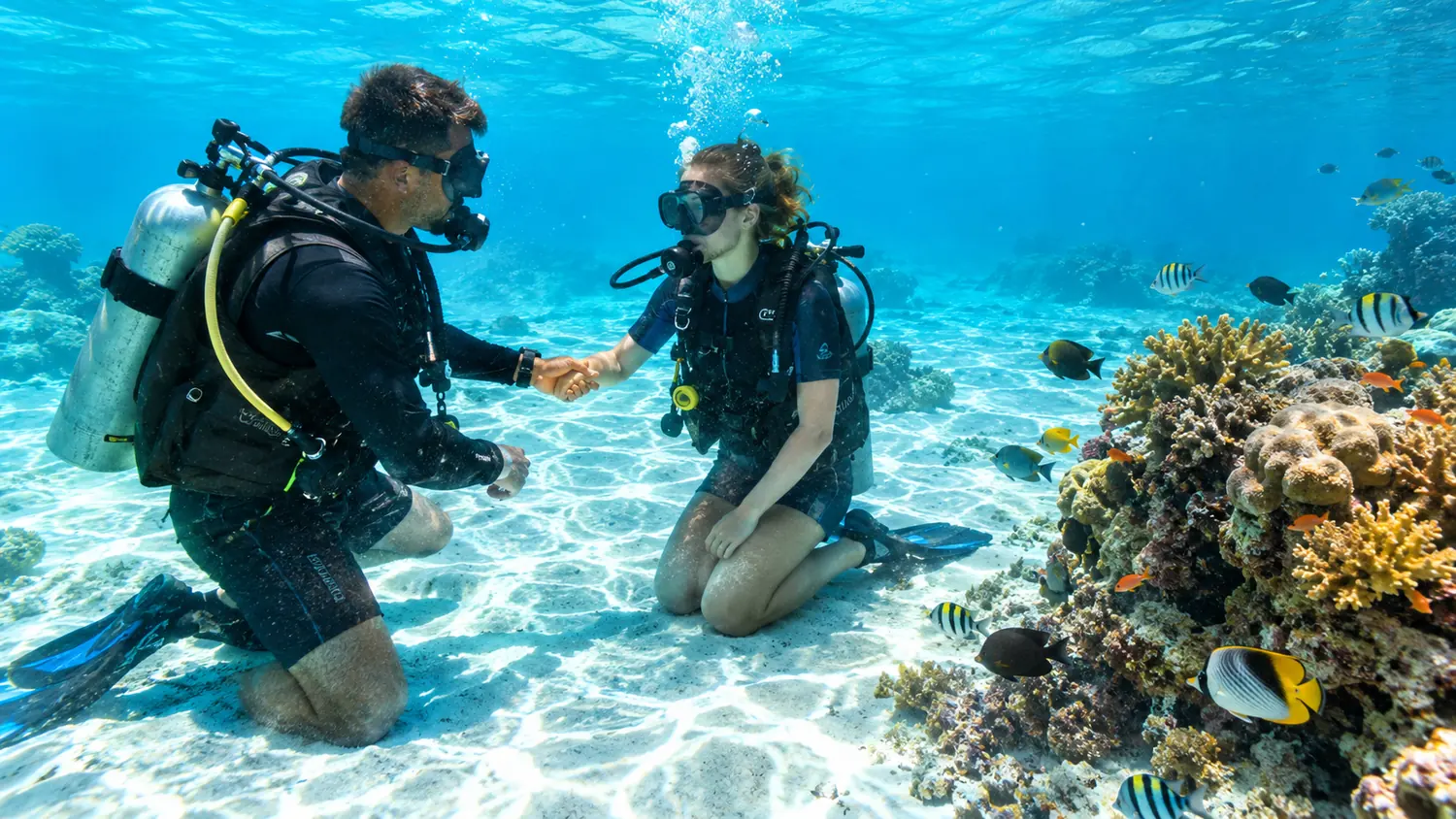
A short theory video of about 20 minutes, an equipment fitting, then a calm dive on a shallow coral reef with your instructor, with photos and videos of you underwater.
After the video, the instructor fits your mask, fins, wetsuit and tank and runs through the hand signals. In the water you start slowly, getting used to breathing through the regulator before you go down along the reef. The first minutes feel strange to almost everyone; after that, most people forget the equipment and watch the fish. The dive depends on sea conditions, so the dive centre picks the day and time.
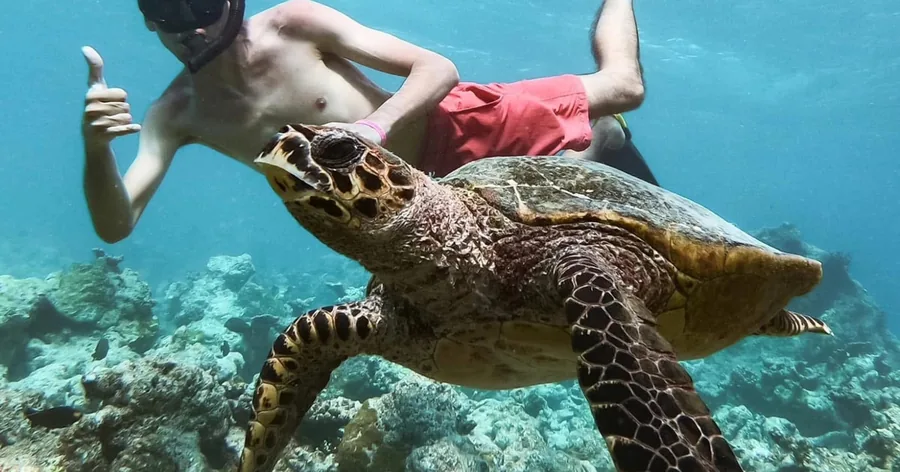
Reviewers describe it as gentle for nervous beginners: one held the instructor's hand all the way and loved it, and another, scared of water, stayed down for more than 25 minutes. Turtles, reef fish and coral heads are typical company on the reefs around Maafushi.
Do I need a medical form to dive?
Yes. You fill in a medical questionnaire before the dive, and some conditions need a doctor's letter saying you are fit to dive. Answer it honestly and bring the letter with you if you need one.
The questionnaire asks about things like heart and lung conditions, ear and sinus problems, recent surgery, medication and pregnancy. If every answer is no, you sign and go diving. If you answer yes to a question, the dive centre needs a doctor's signature before you go in the water, so check the form well before your trip and see your own doctor at home if anything applies.
A cold or a blocked nose on the day can also make equalising your ears hard; tell the instructor, who may suggest another day. Snorkeling and the submarine need no medical form.
Can non-swimmers see the reef?
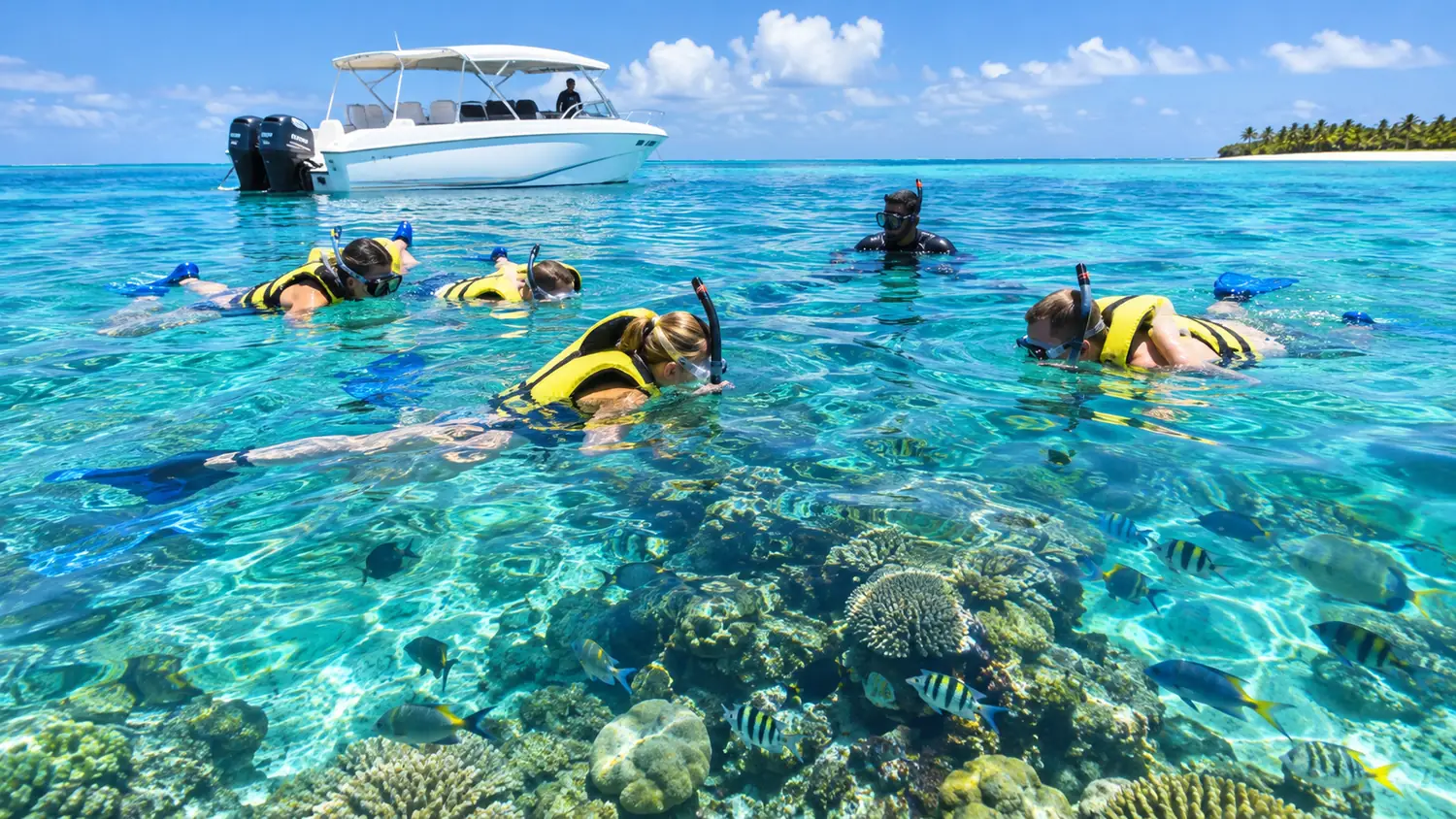
Yes. Non-swimmers snorkel on guided trips in a life vest with a guide beside them, and reviewers say crews are reassuring. For no swimming at all, take the submarine, or watch dolphins from a sunset cruise.
A life vest keeps you floating on the surface, so you only need to put your face in the water and breathe through the snorkel. Guides start in calm lagoons and sheltered reef spots, hand out masks and fins, and brief you before each swim. On the nurse shark, reef and sandbank trip (4.8 from 112 reviews) a snorkel guide swims with the group and a lifeguard watches from the boat; reviewers describe the staff as reassuring for weak swimmers and the groups as small.
The Villimalé snorkel with its island cats is the exception: it is for ages 10 and up, and you must be able to swim. Everything else in this guide welcomes non-swimmers.
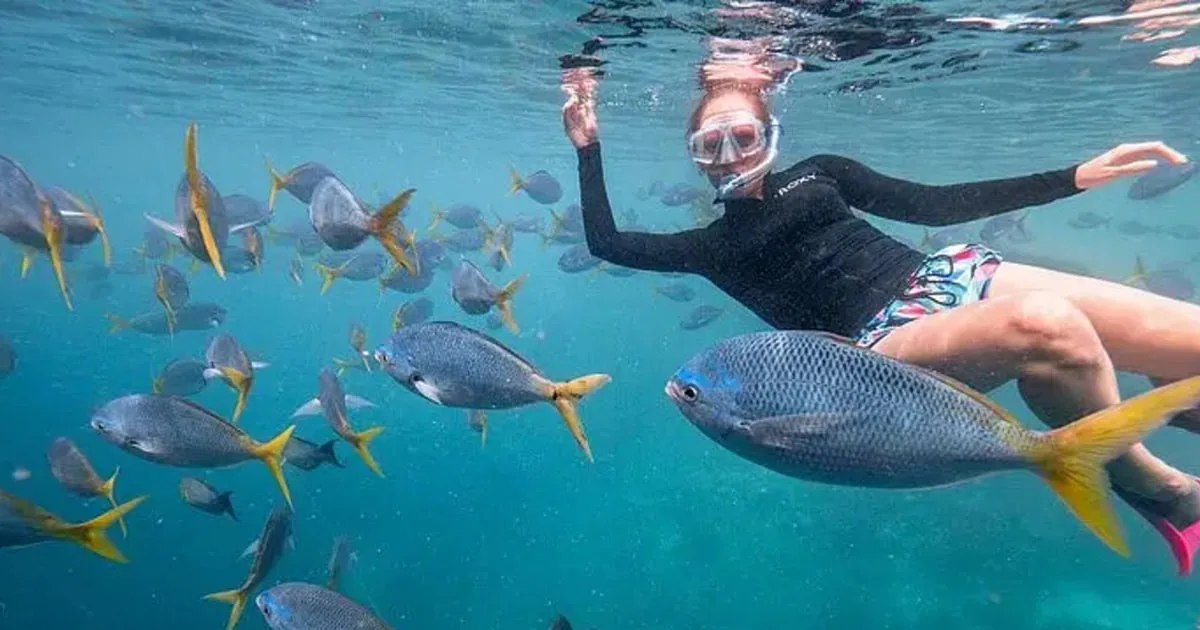
A guide in the water, a lifeguard on the boat and a life jacket for everyone: three hours on a reef, a nurse shark point and a sandbank.
Check dates for the nurse shark, reef and sandbank tripIs there a submarine in the Maldives?
Yes. A passenger submarine off Malé dives for about 45 minutes to about 45 m, with stops at the reef and in deeper water. You stay dry behind large windows, and it does not run on Mondays and Fridays.
The submarine dive to 45 metres takes about 2.5 hours in all, with pickup in Malé, Hulhumalé or at the cruise pier. The first stop is at about 25 m, then about 40 m and about 45 m, looking out at corals, snappers and turtles, and possibly reef sharks. There is no swimming and no special equipment, so it suits non-swimmers and anyone who would rather stay dry; check the listing for any age limits.
Sharks have been protected here since 2010, and reef sharks remain a common sight, but every dive sees something different. It is a new listing with no reviews yet.
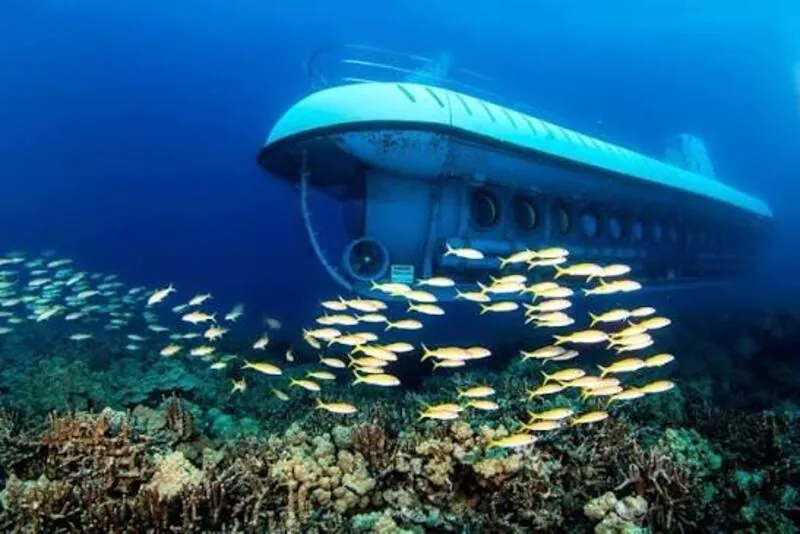
The submarine dive descends to about 45 metres in a 45-minute dive, with stops at the reef and in deeper water seen through large windows, and pickup in Malé, Hulhumalé or at the cruise pier. It takes about 2.5 hours in all and runs every day except Mondays and Fridays.
Explore the submarine diveSnorkel or dive first?
Snorkel first if you are unsure about the water: it is the easiest way to see the reef and costs far less. Book the dive once you know you enjoy it, or choose the submarine if you would rather stay dry.
Many people snorkel on their first day and dive later in the trip, once they are used to the mask and the sea. The table sets out the options in this guide side by side. Every trip on this site gives a full refund if you cancel up to 24 hours ahead, so you can change your mind.
| Option | Need to swim? | Depth | Time | Best for |
|---|---|---|---|---|
| Snorkel trip | No, with a life vest and a guide | At the surface, over a reef a few metres down | About 3 to 7 hours | Everyone, including non-swimmers |
| Discover Scuba | Comfort in the water helps; the instructor stays beside you | Shallow, set by the instructor | About 3 hours | Breathing underwater for the first time |
| Submarine | No | About 45 m | About 2.5 hours, 45 minutes underwater | Staying dry, non-swimmers |
| Sunset cruise | No | On deck | 2 hours | Dolphins from the boat, the evening light |
| Villimalé snorkel | Yes | At the surface on the house reef | 3.5 hours | Confident swimmers aged 10 and up |
How long after diving can I fly or take a seaplane?
Divers Alert Network advises at least 12 hours after a single dive and 18 hours after several dives or days of diving. Seaplanes and domestic flights count as flying, so plan your dives early in the trip.
The rule exists because nitrogen from the dive needs time to leave your body, and flying soon after can make you unwell. The full advice is in the Divers Alert Network guidelines. In practice, do not dive on your last full day if you fly out the next morning, and remember that the seaplane or domestic flight to a resort, or to Dharavandhoo for the Hanifaru mantas, counts too.
Snorkeling and the submarine leave you nothing to wait for, so they fit well on the last day. The sunset dolphin cruise is a good final evening: two hours at sea looking for spinner dolphins, with pickup from Malé, Hulhumalé or the airport.
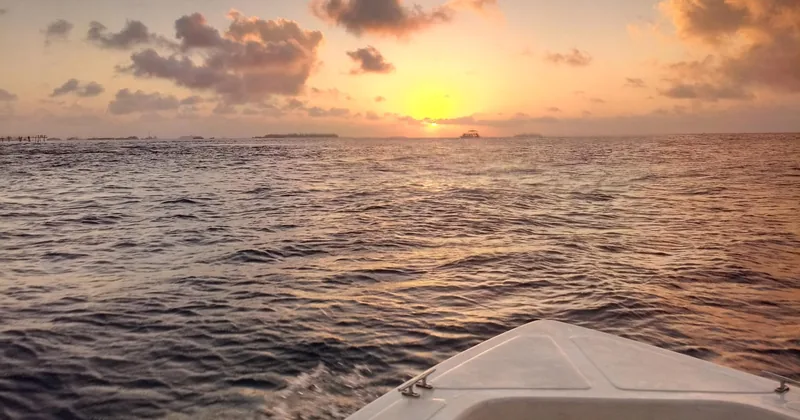
A relaxed last evening before your flight: two hours at sea at sunset looking for spinner dolphins, no swimming needed.
Check dates for the sunset dolphin cruiseWhat comes after a first dive?
If you enjoy it, an Open Water course over a few days lets you dive on your own with a buddy, and opens up the Maldives' famous channels, wrecks and manta cleaning stations.
Most dive centres in the Maldives, including the ones on the guesthouse islands, run full beginner courses. The Discover Scuba dive is often a good first step, and some centres count it towards the course. Once certified, you can join boat dives to reefs, channels and wrecks, always with a guide who knows the local sites and briefs you before each dive.
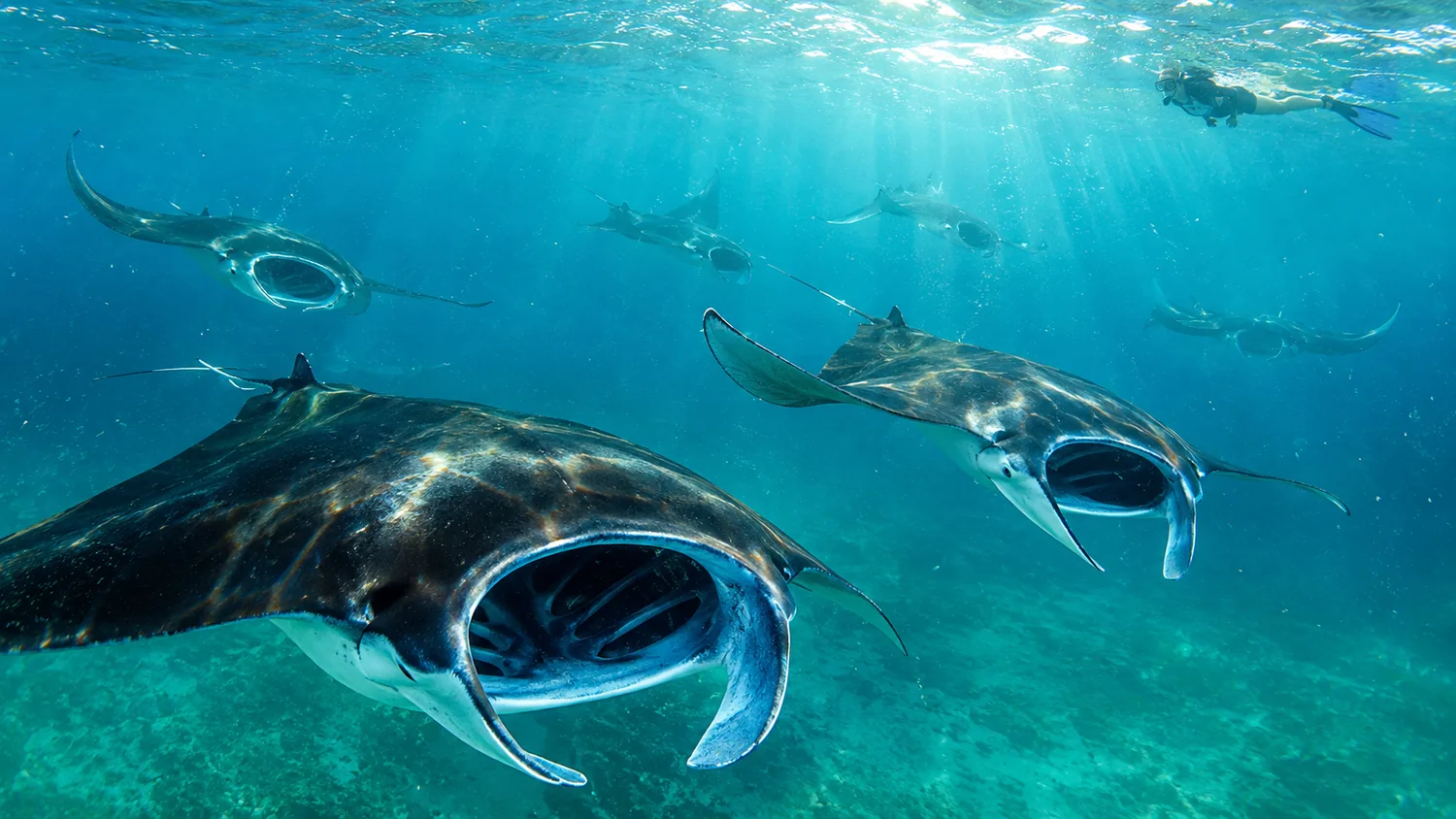
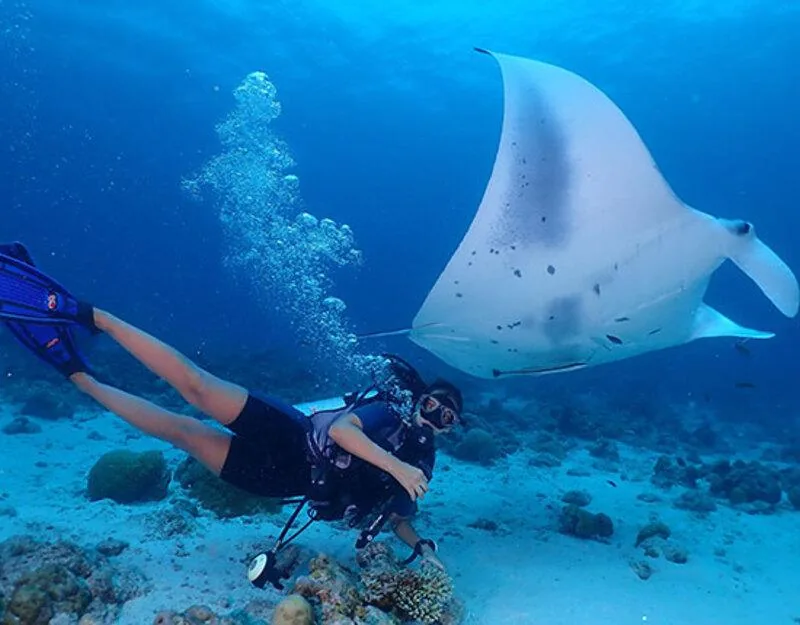
Mantas are a highlight for new divers, at cleaning stations that change sides with the monsoon; Hanifaru Bay itself is snorkel only. Where and when to see them is in manta rays and Hanifaru Bay.
Frequently asked questions
How old do you need to be for a first dive?
It depends on the dive centre; ask before you book. Snorkel trips with a life vest suit children, and the submarine needs no diving at all.
Can I dive if I wear glasses?
Yes. Contact lenses work under a dive mask, and many dive centres have masks with corrective lenses; ask when you book.
Is the submarine suitable for children?
Usually, yes. There is no swimming and no equipment, you sit behind large windows, and the whole trip takes about 2.5 hours; check the listing for any age limits.
Can I snorkel and dive on the same day?
Yes, snorkeling before or after a dive is fine. Just leave at least 12 hours between your last dive and any flight or seaplane.
Ready to book
Choose your trip
Check your date and the live price on GetYourGuide; the refund terms are shown on each option.
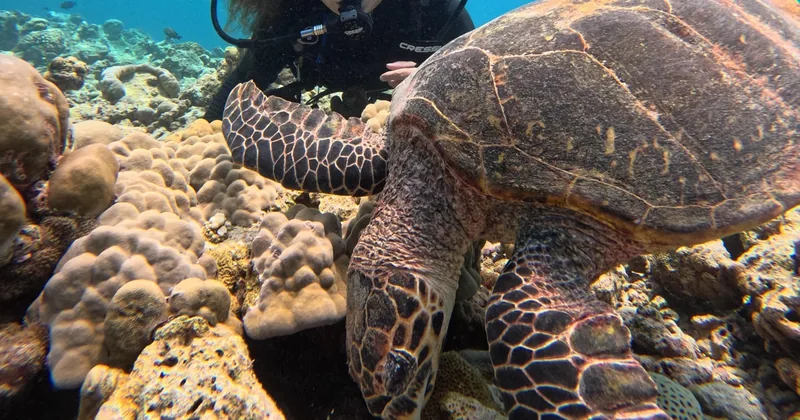
Discover Scuba Diving, Maafushi
A first breath underwater with an instructor beside you, no certificate needed
Submarine Dive to 45 Metres
Sunset Dolphin Cruise
Two easy hours at sea at the end of the day, looking for spinner dolphins, no swimming needed