Booking choice: The South Ari whale shark and manta trip, ★ 5.0 (4). Check dates Compare the options below
Most snorkel trips from Malé, Hulhumalé and Maafushi stay in the Malé atolls, where you meet turtles, nurse sharks and stingrays. Whale sharks are a different trip: they gather along one stretch of reef in South Ari Atoll, a long boat ride away, and where you start from decides what your day looks like.
This guide explains where to swim with them, the best months, a day trip compared with a stay on South Ari, the rules on the water and what an encounter is really like. Mantas, which share the South Ari trip, are covered in the manta rays and Hanifaru Bay guide, and the months on the water in general in the best time for Maldives water tours.
The quick answer
Where: the South Ari Marine Protected Area, along the outer reef near Dhigurah, Dhangethi and Maamigili, about 82 km from Malé. When: seen all year, with many operators reporting the busiest months from about August to November. From Maafushi: about 90 minutes each way by speedboat, an 8 to 9 hour day with an early start. From Dhigurah or Dhangethi: a boat trip of about 4 hours. Your chance: high on a calm day, never promised; crews search along the reef and you swim when a shark is spotted near the surface. Rules: at least 3 m from the body and 4 m from the tail, no touching, no feeding, no flash or selfie sticks, and at most 3 boats in the zone around one shark. Safety: whale sharks are filter feeders that eat plankton and small fish, calm around snorkelers, and every swim is guided from the boat.
Can you see whale sharks on a day trip from Maafushi or Malé?
Yes. South Ari, where whale sharks are seen all year, is about 90 minutes from Maafushi by speedboat, so a whale shark day is long but realistic at 8 to 9 hours. No operator can promise a sighting, so treat it as a high chance rather than a sure thing.
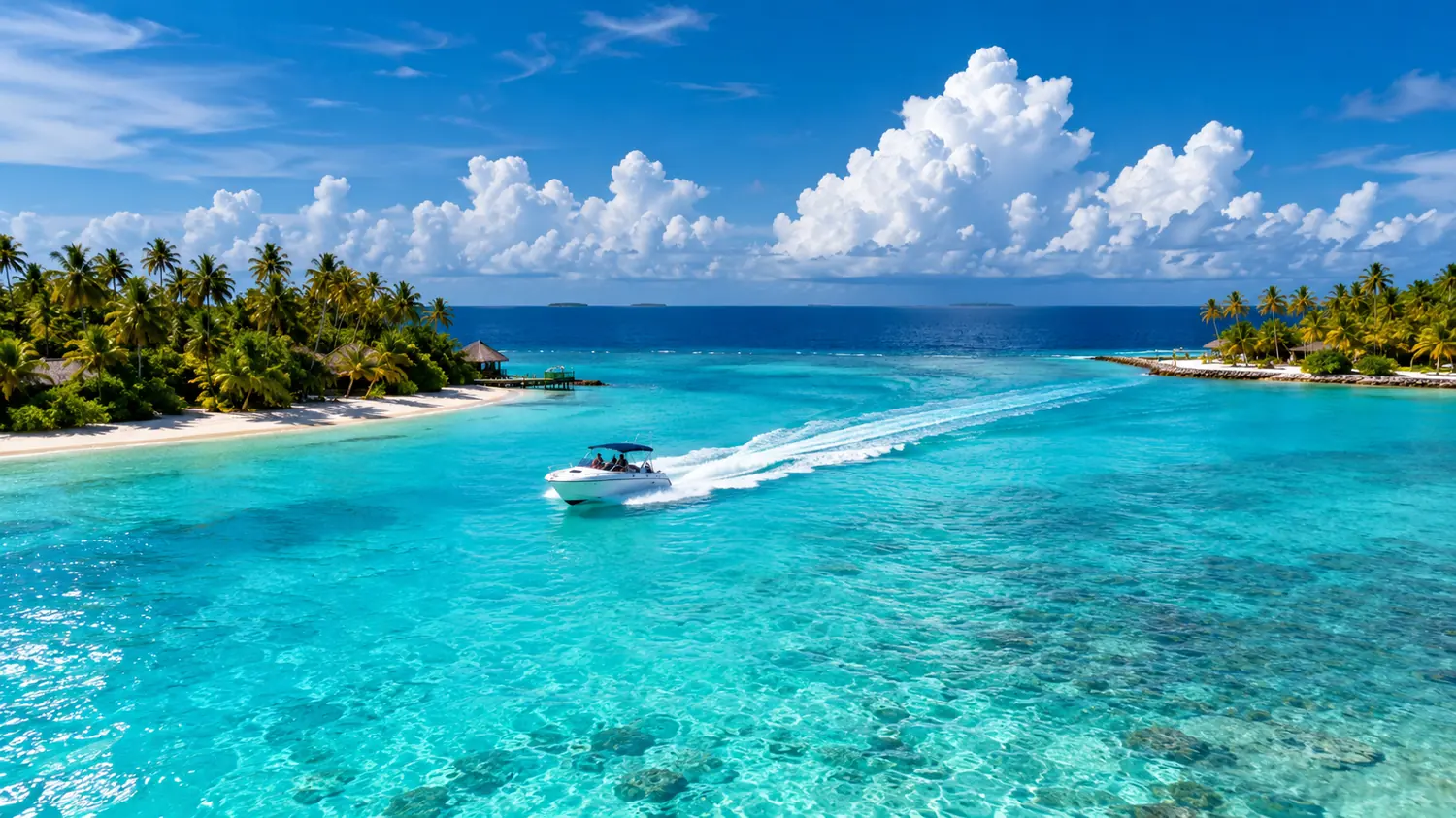
Excursion desks and guesthouses on Maafushi sell whale shark days on set dates, with a typical departure around 07:30 and a return in the middle of the afternoon. About 3 hours of the day go on the crossing between atolls, and most of the rest on searching the South Ari reef. Crews follow the forecast of the Maldives Meteorological Service and move the trip when the sea is rough, so keep a spare day in your plan and book this one early in your stay.
If a long day at sea doesn't appeal, the Maafushi sharks, rays and dolphins day stays closer to the island, with nurse sharks, stingrays, a sandbank lunch and the dolphin point, rated 4.6 from 117 reviews. Every other option from the island is in Maafushi excursions: what to book.
Where do you swim with whale sharks in the Maldives?
In the South Ari Marine Protected Area (SAMPA), a stretch of outer reef in South Ari Atoll near Dhigurah, Dhangethi and Maamigili. It is the only known place of its kind where whale sharks gather all year round.
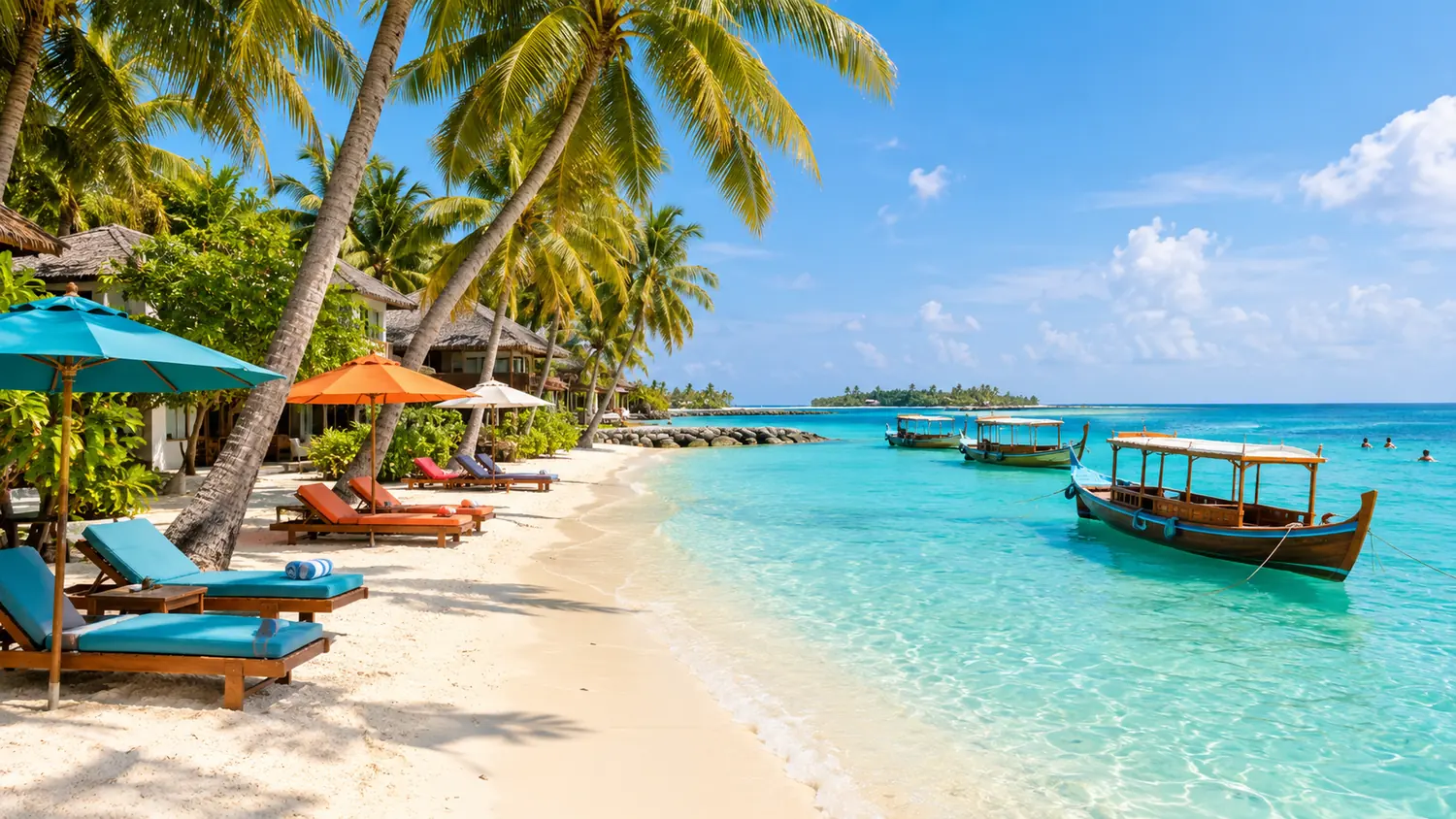
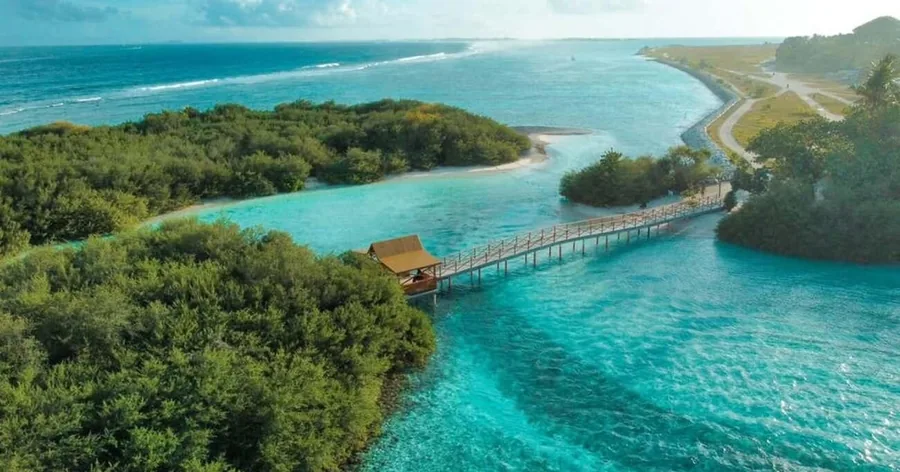
The sharks cruise along the outer edge of the reef, often close to the surface, and boats search for them along that edge. Dhigurah, a long, narrow island with guesthouses, lies right beside the protected area and is home to the Maldives Whale Shark Research Programme. Dhangethi is close by, and Maamigili has the domestic airport for South Ari. Far to the south, Fuvahmulah has larger whale sharks, best from December to March, but at 497 km from Malé it is a separate journey, not an excursion.
Background on the area and its giants is on Visit Maldives.
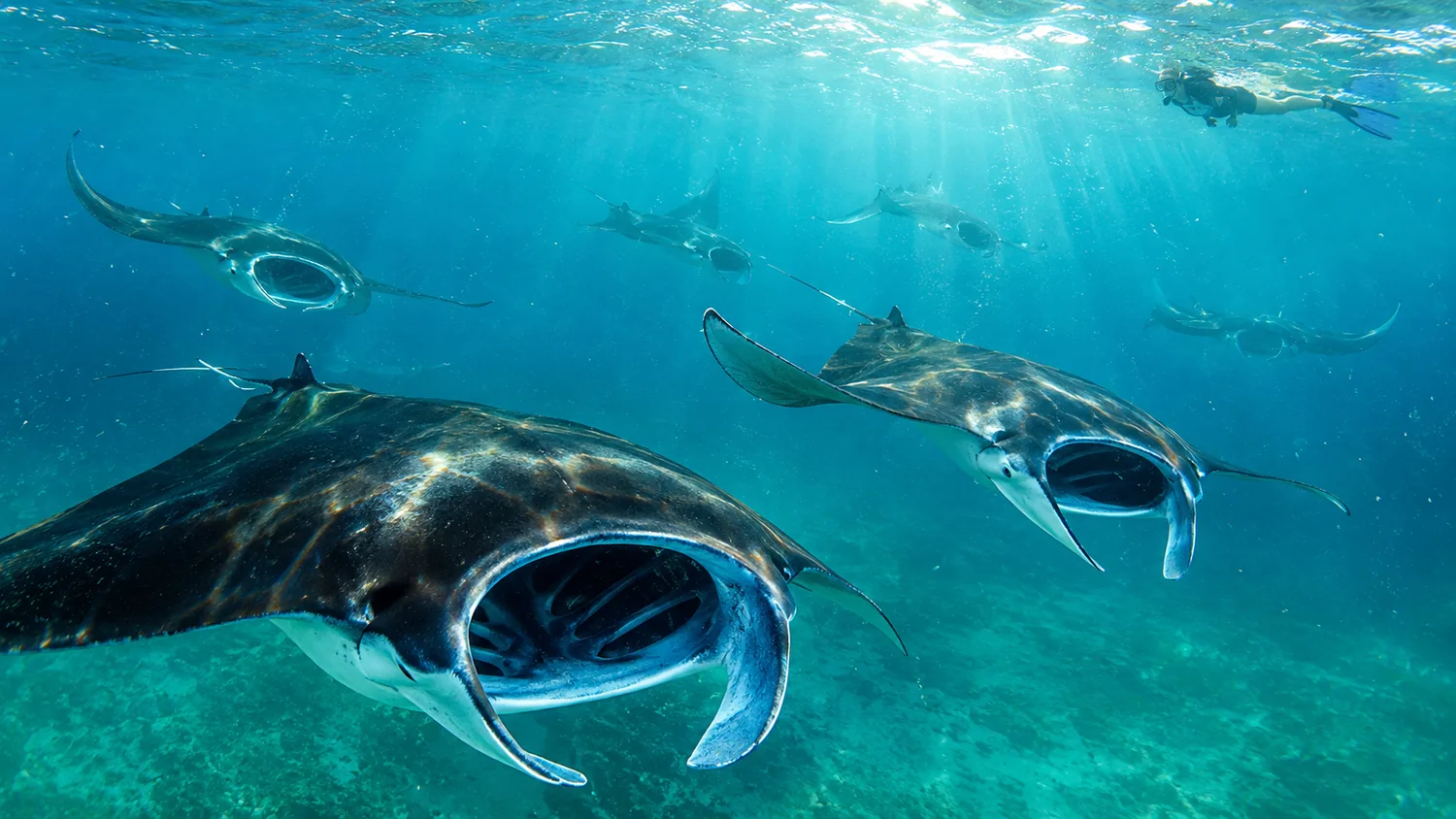
Staying on Dhigurah or Dhangethi? A four-hour boat trip to the whale shark reef of South Ari, then a manta station, with a guide and snorkel gear.
Check dates for the South Ari whale shark and manta tripWhat is the best month to see whale sharks in the Maldives?
Any month: whale sharks are seen all year in South Ari, with many operators reporting the busiest months from about August to November. A calm, sunny day matters more than the month, because crews spot the sharks from the boat.
Researchers at the Maldives Whale Shark Research Programme found no clear seasonal pattern in the number of sharks in the protected area, so a February visit has a fair chance too. What changes through the year is the weather. From December to April the northeast monsoon brings drier, calmer days and clear water; from May to November the southwest monsoon brings more wind and short heavy showers, and a rough day can move a long crossing. The full picture is in the best time for water tours.
Is it safe to swim with whale sharks?
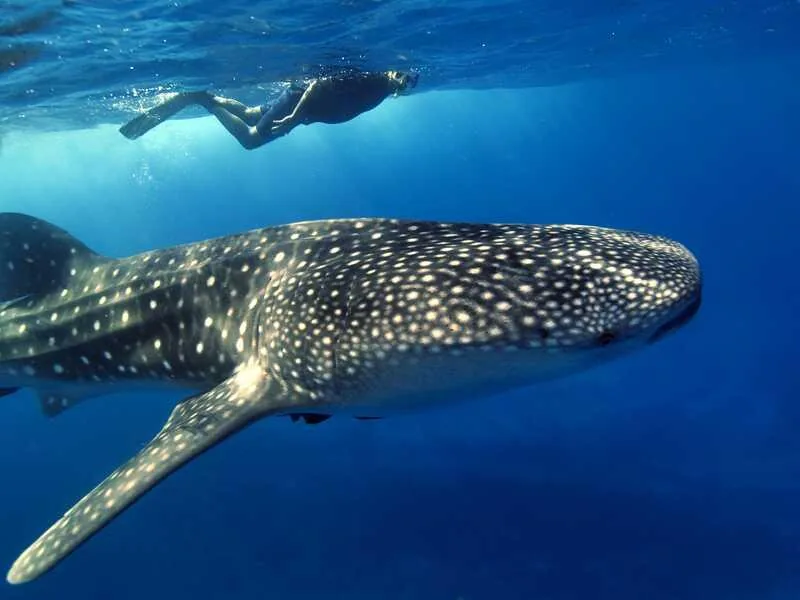
Yes. Whale sharks are filter feeders that eat plankton and small fish, they are slow and calm around snorkelers, and every swim is guided with the boat close by. Your part is to keep your distance and stay with the group.
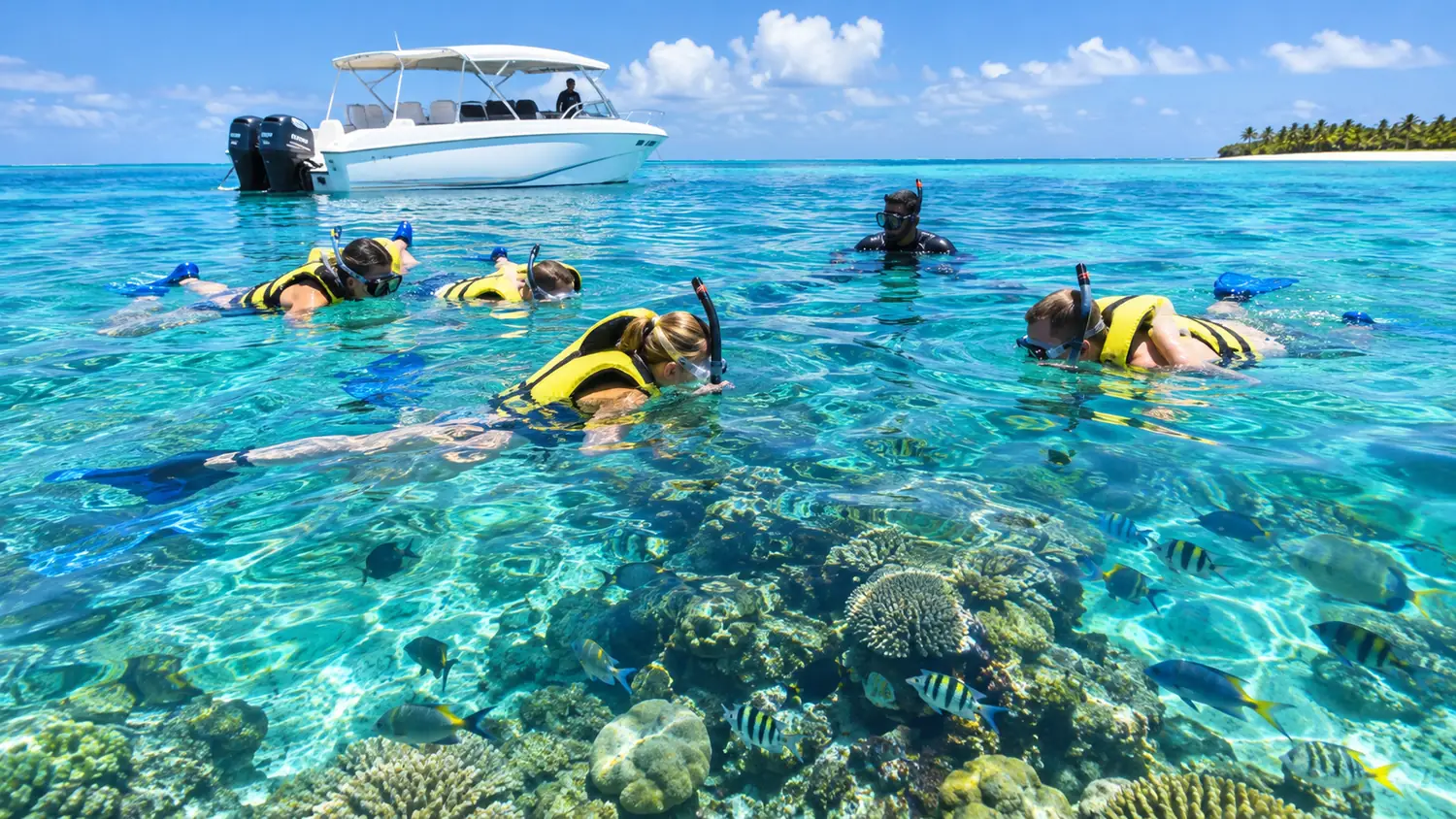
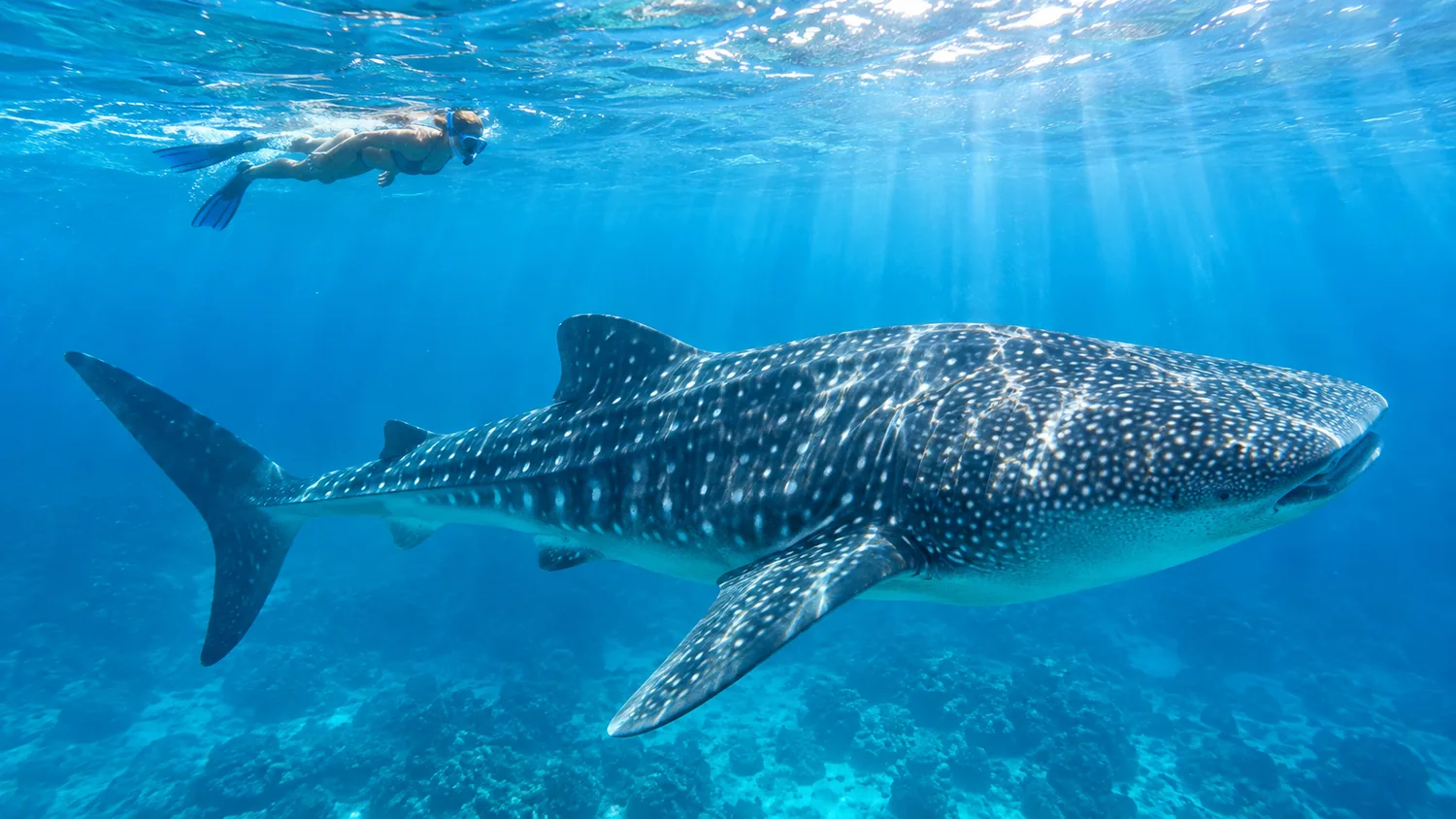
A whale shark takes no interest in people. It cruises at its own pace and simply moves deeper if it is disturbed, which is why good crews ask you to slip into the water quietly and swim beside it rather than in front. Crews hand out life vests, masks and fins, guides pick the drop point and brief you before each swim, and weaker swimmers can float in a life vest. The crossing to the reef can be bumpy on open water, so take seasickness tablets if you are prone.
What needs looking after is the shark. Many South Ari whale sharks carry scars from boats, which is why the rules below ask boats to slow down near them, and why careful operators are worth choosing.
Prefer to stay near Maafushi? A long day with nurse sharks, stingrays, a sandbank lunch and the dolphin point, with crews who are patient with non-swimmers.
Check dates for the Maafushi sharks, rays and dolphins dayWhat are the rules for swimming with whale sharks?
A national regulation from 2024 sets them: at least 3 m from the body and 4 m from the tail, no touching, feeding, flash or selfie sticks, at most 3 boats in the 250 m zone around a shark, and slow boat speeds near it.
- Distance: stay at least 3 m from the body and 4 m from the tail, and approach calmly from the side.
- Hands off: no touching or holding on, and no chasing or blocking its path.
- No feeding: never offer food or throw anything into the water.
- Cameras: no flash, bright lights or selfie sticks.
- Boats: at most 3 vessels in the 250 m contact zone, no more than 5 knots inside it and 2 knots within 50 m of the shark.
- Your guide: follow the signals for when to enter the water and when to give the shark space.
The rules are summarised in the official announcement of the regulation.
Day trip from Maafushi or a stay on Dhigurah?
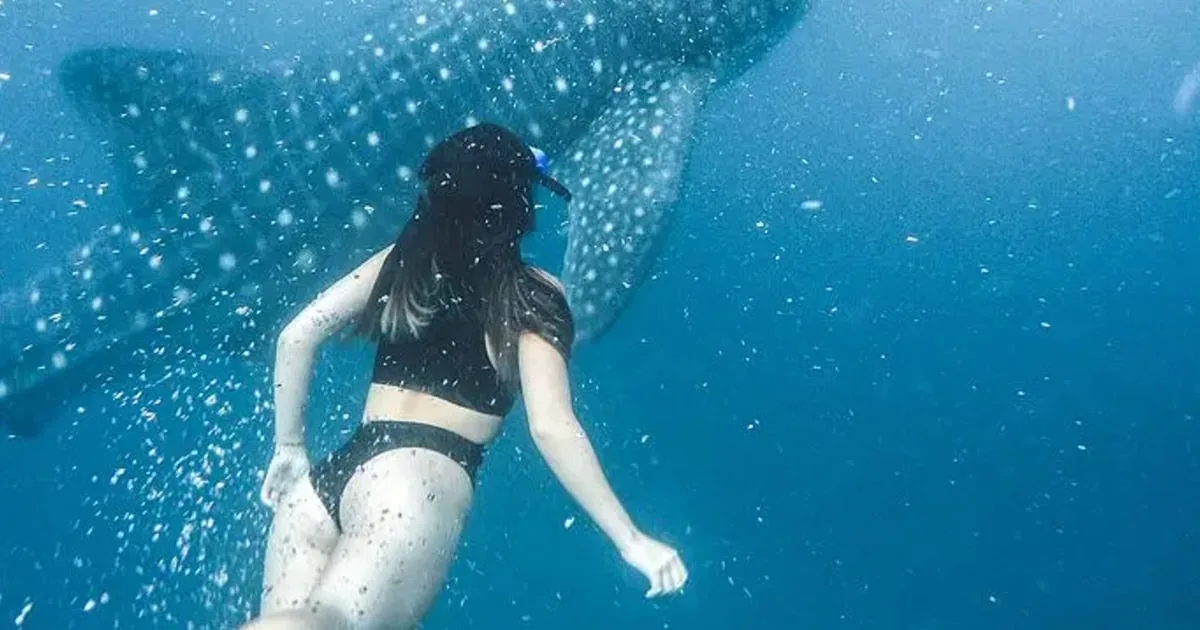
If whale sharks are a priority, stay two or three nights on Dhigurah or Dhangethi: the reef is close and you can go out more than once. A day trip from Maafushi works if you have one day for it and don't mind about 3 hours on the boat.
The Dhigurah whale shark and manta trip is built for guests staying on Dhigurah or Dhangethi, with hotel pickup on the island. It is rated 5.0 from 4 reviews, and one reviewer saw whale sharks twice and mantas twice, plus dolphins and a batfish. The operator is open that sightings depend on the day, and the crew keeps searching as long as possible.
| Base | Getting to South Ari | Time on the water | Suits |
|---|---|---|---|
| Maafushi (South Malé Atoll) | About 90 minutes each way by speedboat on the day | An 8 to 9 hour day, leaving around 07:30 | One whale shark day within a Maafushi stay |
| Dhigurah (South Ari) | Shared speedboat from Malé in about 2 hours, or a domestic flight to Maamigili and a short boat | About 4 hours on the guided trip, with the reef close by for a second try | Whale shark fans and slow travellers in a guesthouse |
| Dhangethi (South Ari) | Speedboat from Malé in about 1.5 to 2 hours | About 4 hours on the guided trip | A quieter South Ari base on the same reef |
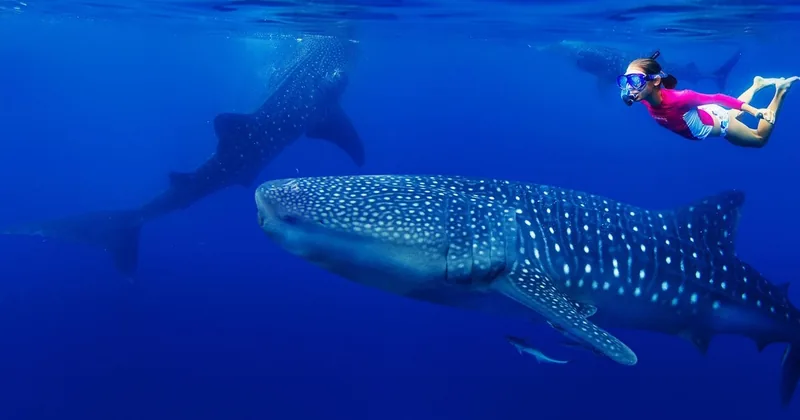
The Dhigurah whale shark and manta ray snorkeling tour takes about 4 hours from Dhigurah or Dhangethi: a boat to the whale shark feeding grounds of the South Ari Marine Protected Area, a guided snorkel alongside at a respectful distance, then a manta cleaning or feeding station. Snorkel gear, the guide, fruit and water are included, and you get a full refund if you cancel up to 24 hours ahead.
Explore the South Ari whale shark and manta tripHow long are you in the water with a whale shark?
Usually a few minutes at a time: the crew spots a shark cruising near the surface, you slip in and swim alongside until it moves off or dives, then you climb back aboard. On a good day there are several short swims.
Whale sharks in South Ari spend much of their time deeper down and come up to warm themselves; only about 16% of the encounters recorded by researchers involve feeding at the surface. So the picture is rarely a shark hanging still with its mouth open. It is a long shadow gliding below you, and you swim with it at its pace, which is quicker than it looks. Fins help, and so does a relaxed, steady kick.
Between swims you wait on the boat while the crew watches the water. A hat and a long-sleeve top make the waiting time comfortable, and keeping your mask and fins next to you means you are ready the moment the call comes.
Who are the South Ari whale sharks?
Mostly young males. Researchers have identified 726 whale sharks in the Maldives, nearly three quarters of them male, and the South Ari sharks tend to leave the area by the time they reach about 8 m and maturity.
The Maldives Whale Shark Research Programme, based on Dhigurah, tells the sharks apart by the pattern of spots on their bodies, as individual as a fingerprint. Some are regulars: one shark has been recorded more than 380 times in 14 years. Its findings are on the research page of the programme.
The South Ari trip continues to a manta station after the whale shark search. Where mantas gather, and when, is in the manta rays guide; for the big seasonal gathering in Baa Atoll, the Hanifaru Bay manta trip is a private speedboat charter, priced as one.
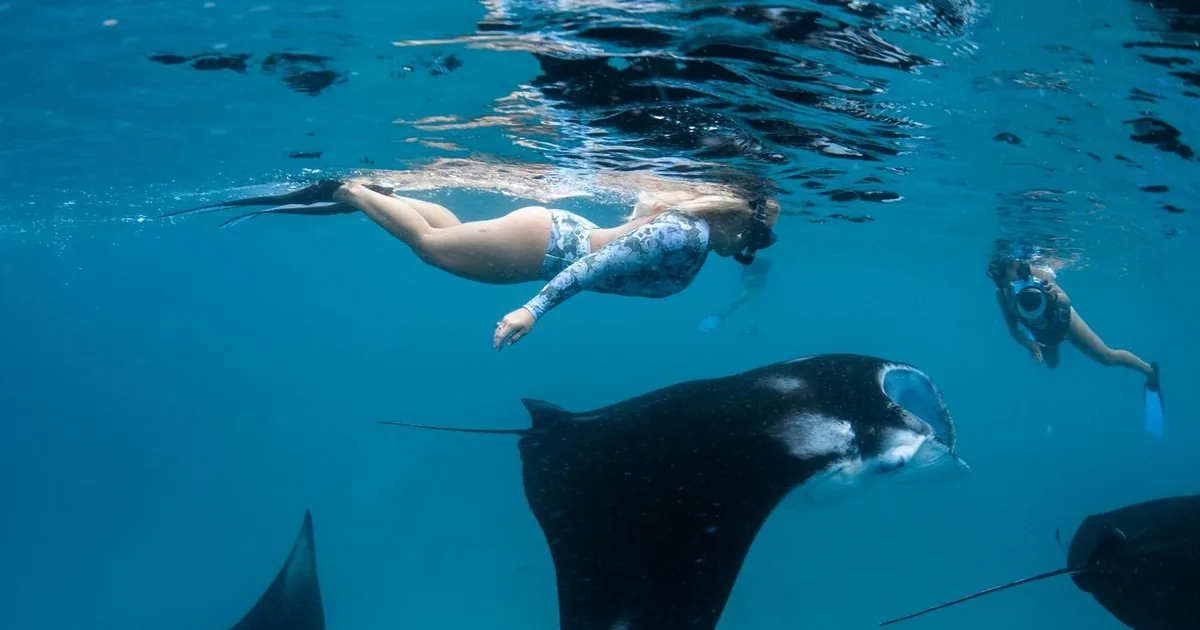
For the Hanifaru Bay manta season: a private speedboat from the airport to Baa Atoll, with the protected-area fee, lunch and a guide included.
Check dates for the Hanifaru Bay manta tripFrequently asked questions
Will I definitely see a whale shark in South Ari?
No one can promise it. Whale sharks are seen all year in South Ari and the chance on a calm day is high, but they are wild animals; good crews search as long as they can, and the South Ari trip also visits a manta station.
Can non-swimmers join a whale shark trip?
They can come along on the boat and often see the shark from above in clear water. For the swim itself you should be at ease in open water with a life vest, mask and fins, because the shark keeps moving.
How big are the whale sharks in South Ari?
Most are young sharks under about 8 m, the size at which they mature and leave the area. Even a young whale shark looks enormous beside you in the water.
What time do whale shark trips leave Maafushi?
Usually around 07:30, returning in the middle of the afternoon, for an 8 to 9 hour day with about 90 minutes at sea each way.
Ready to book
Choose your trip
Check your date and the live price on GetYourGuide; the refund terms are shown on each option.
Whale Sharks & Mantas, South Ari
For guests staying on Dhigurah or Dhangethi: a search for whale sharks in the South Ari marine area, then a manta station
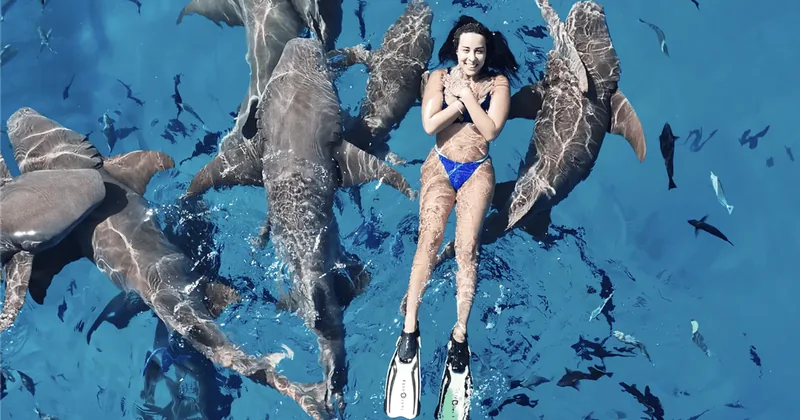
Maafushi Sharks, Rays & Dolphins
- Departs from Maafushi harbour, about 06:00 to 07:00
- Mask, snorkel, fins, towel and water
- Packed lunch on the sandbank
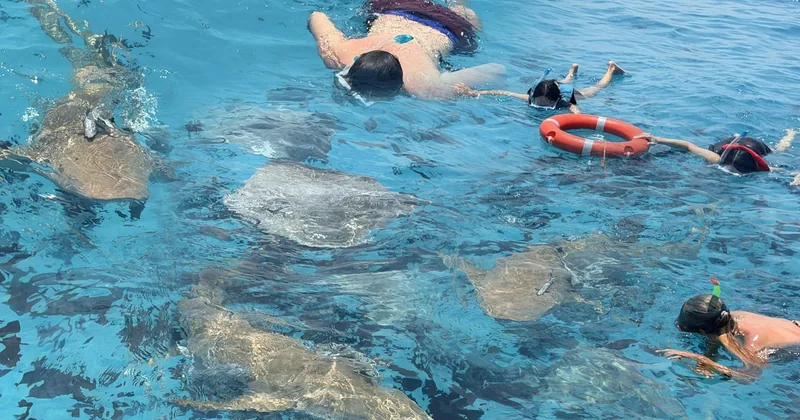
Nurse Sharks, Reef & Sandbank
- Pickup in Malé, Hulhumalé or at the airport
- Speedboat with shade and an onboard toilet
- Mask, snorkel, fins and a life jacket