Booking choice: The Hanifaru Bay manta trip, New listing. Check dates Compare the options below
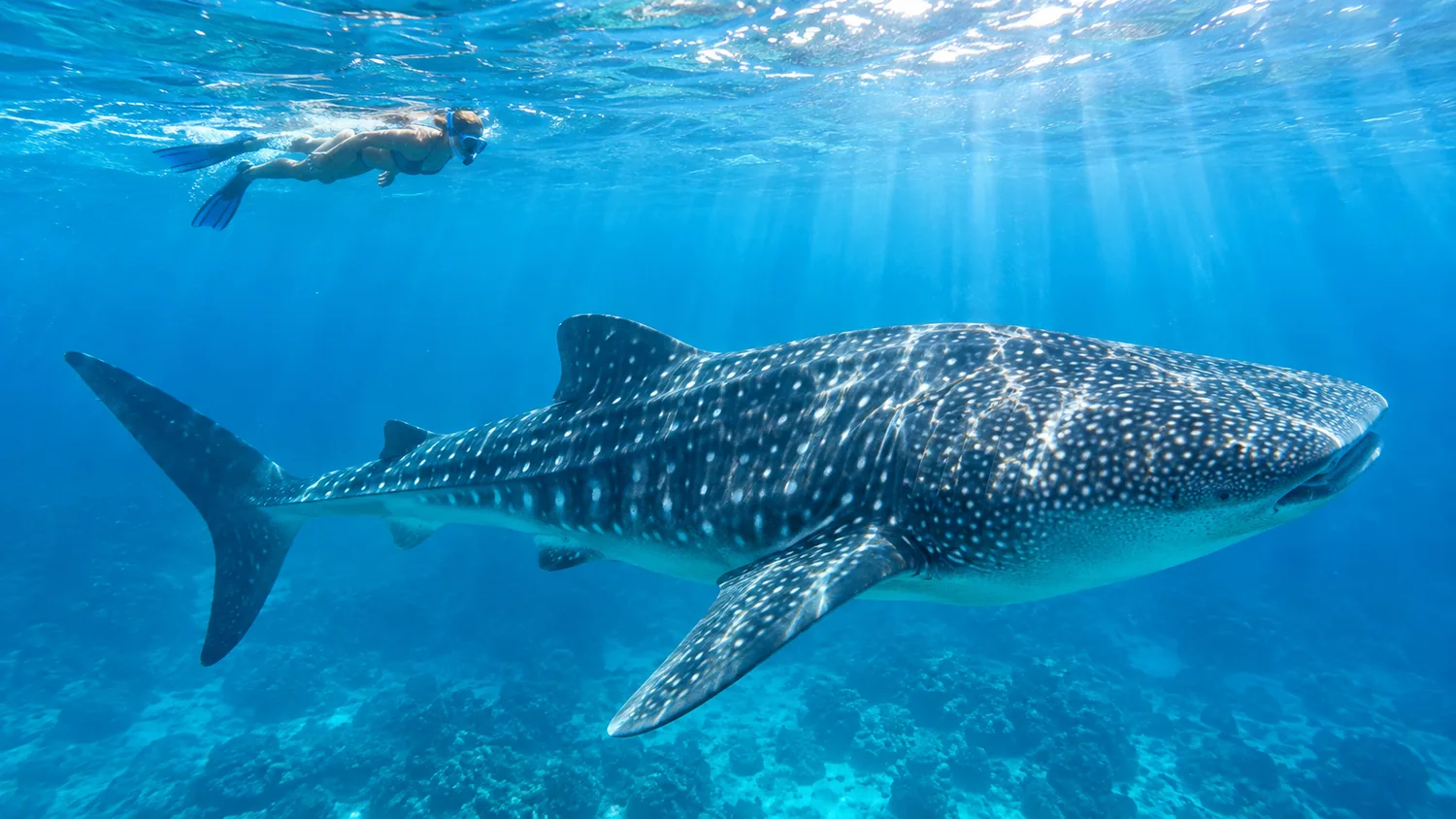
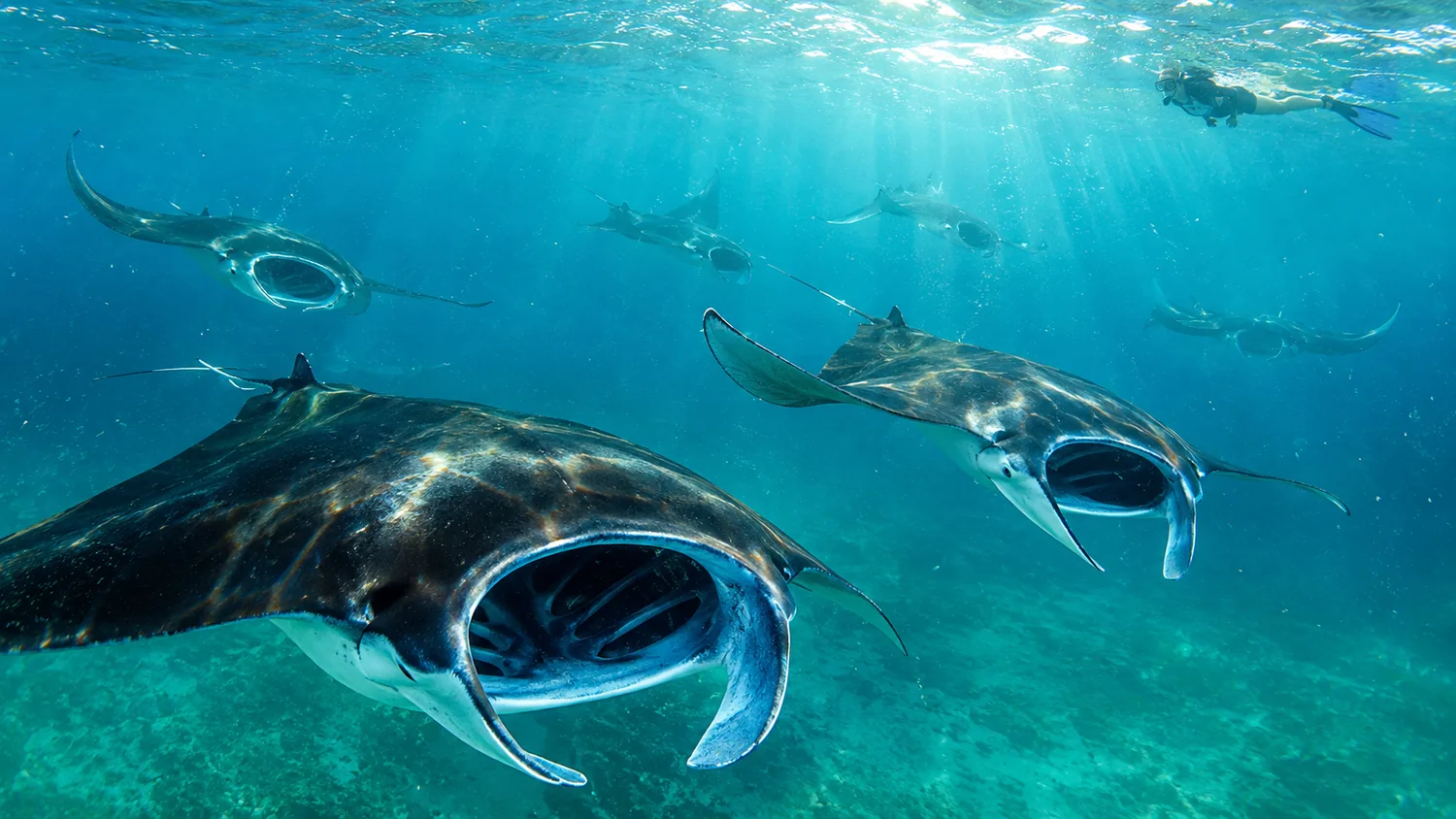
The Maldives has the largest known population of reef mantas in the world, and you do not have to travel to Hanifaru to meet one. What Hanifaru adds is the scale: in the right weeks of the southwest monsoon, plankton gathers in the bay and dozens of mantas feed in a small space, close to the surface.
This guide covers the season, how to get there, the rules, and where to see mantas nearer Malé or Maafushi when Baa Atoll doesn't fit your plan. The South Ari whale shark trip, which also visits a manta station, is described in swimming with whale sharks.
The quick answer
Season: about May to November, during the southwest monsoon, busiest in the middle of it; from December to April few mantas feed in the bay. Rules: snorkel only, no scuba, no anchoring, visits with guides, time limited and capped, with rangers on site checking permits and numbers; a protected-area fee applies, usually arranged by your operator. Getting there: about 118 km from Malé, by a short domestic flight to Dharavandhoo and 5 to 10 minutes by boat, or by private speedboat charter from Velana airport, about 2.5 to 3 hours each way. Nearer Malé: mantas visit cleaning stations all year, mostly on the western sides of the atolls from December to April and the eastern sides from May to November. Numbers: over 6,000 reef mantas identified in the Maldives. Protection: all rays have been protected since 2014.
When is manta season at Hanifaru Bay?
From about May to November, during the southwest monsoon, with the busiest feeding usually in the middle months. Mantas come when the currents bring plankton into the bay, so numbers change from day to day and are never promised.
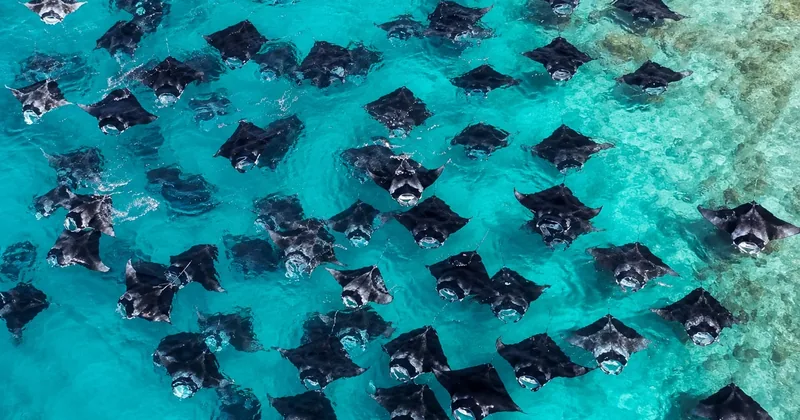
Mantas follow their food. In the southwest monsoon, currents carry plankton to the eastern sides of the atolls, and Hanifaru, a small bay on the eastern edge of Baa Atoll, collects it. On the best days, more than 150 mantas have been recorded feeding together. The same plankton lowers the visibility, so the water is greener than in the brochures and the mantas appear suddenly out of the haze, often just below you.
From December to April the bay is quiet, and the mantas move to the western sides of the atolls. The months and the weather in general are in the best time for water tours.
Can you scuba dive at Hanifaru Bay?
No. Hanifaru Bay is snorkel only: scuba diving and anchoring are not allowed, and visits go with a guide. Divers meet mantas at cleaning stations elsewhere in Baa Atoll and across the Maldives.
The bay is a core area of the Baa Atoll UNESCO Biosphere Reserve, about 529 hectares, managed as a protected area with permits. Rangers on site check permits and the number of snorkelers, visits are time limited, and the number of boats and swimmers is capped, so crews often wait their turn. A protected-area fee applies, usually arranged by your operator. Details are on the protected areas website of the Maldives.
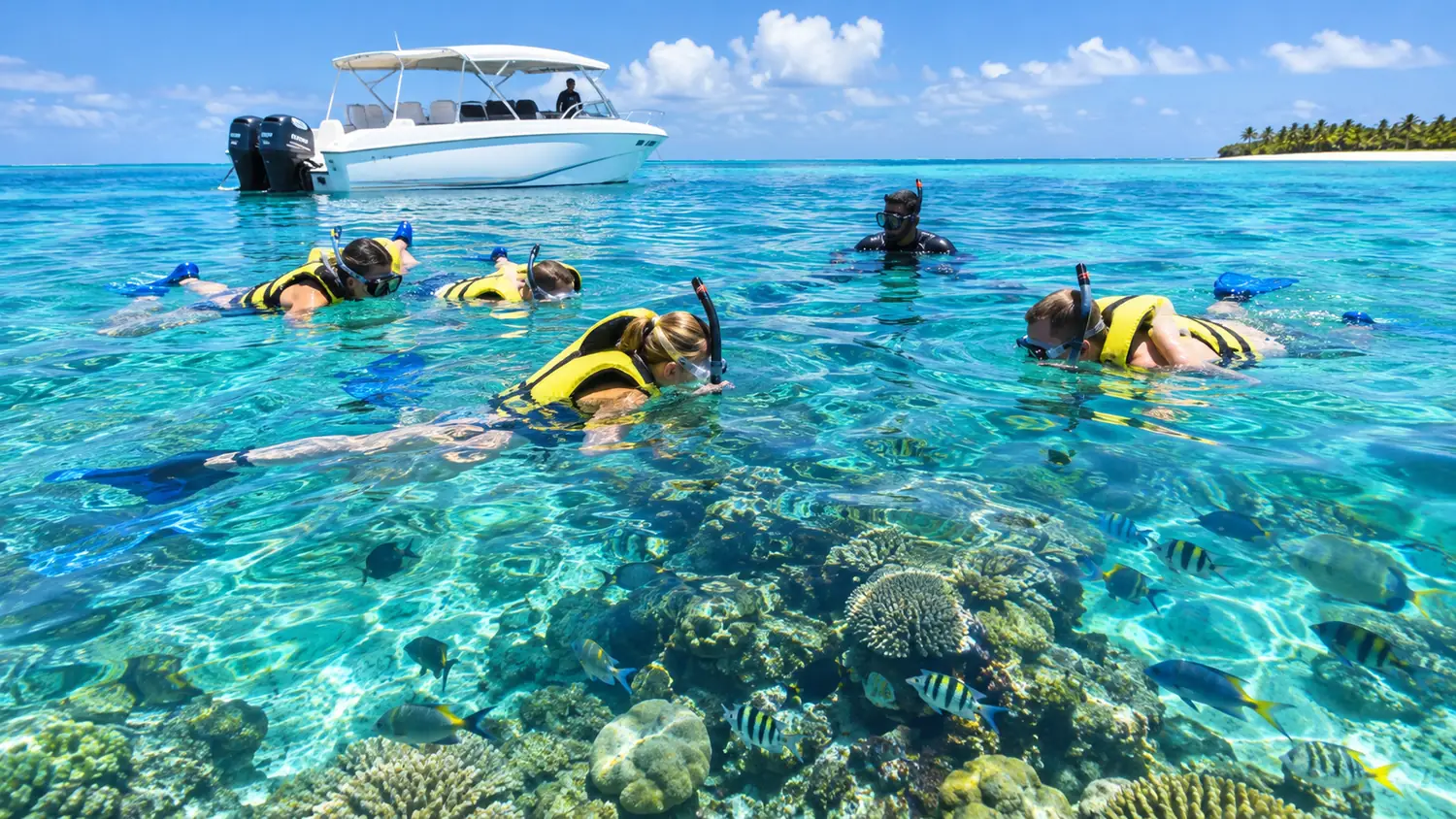
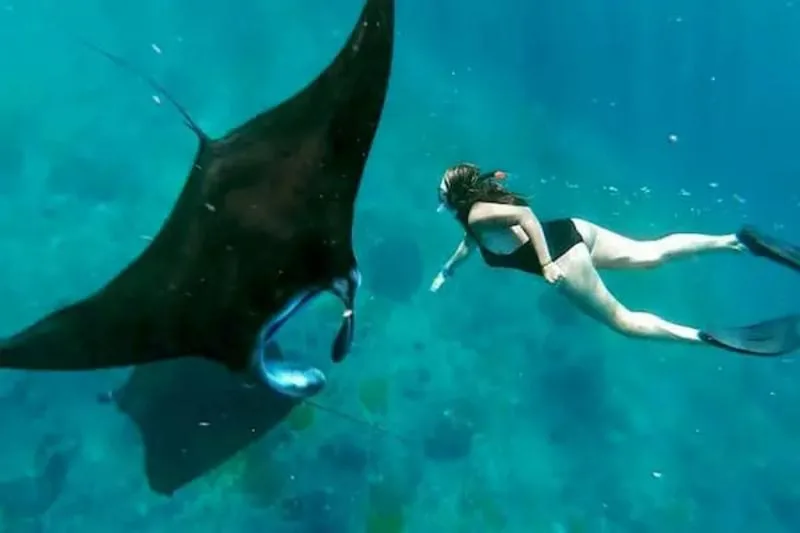
Snorkeling is all you need, because the mantas feed close to the surface and you float above them with a mask and fins. Guides brief you before each swim and choose the moment to slip in, and life vests are on board.
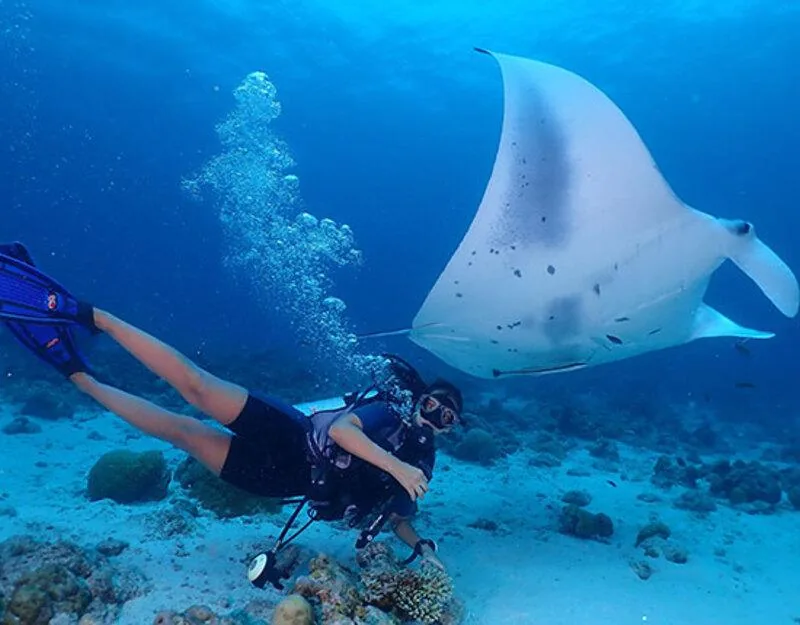
Snorkel Hanifaru Bay with a guide in the manta season, by private speedboat from Velana airport, with the protected-area fee and lunch included.
Check dates for the Hanifaru Bay manta tripHow far is Hanifaru Bay from Malé?
About 118 km, in Baa Atoll to the north. That is too far for a normal shared day boat from Malé or Maafushi, so most visitors stay in Baa Atoll or fly in.
For comparison, the whale shark reef of South Ari is about 82 km from Malé and already makes a long day from Maafushi. Hanifaru is further, across open water, which is why the classic way to see it is from Dharavandhoo, the island beside the bay, or from a resort in Baa Atoll that runs its own trips. The trips further out from Malé are listed on the homepage.
How do you get to Hanifaru Bay?
Take a short domestic flight from Velana International Airport to Dharavandhoo in Baa Atoll, then a boat ride of 5 to 10 minutes to the bay. The alternative is a private speedboat charter from the airport, about 2.5 to 3 hours each way.
Dharavandhoo has guesthouses, and Hanifaru trips from the island are short, so you can wait for a good day and go when the mantas are feeding. Two or three nights there give you the best chance, because quiet days happen even in the season and the bay rewards patience.
The Hanifaru Bay manta trip is the day-trip alternative from Velana airport. It is a new listing without reviews yet and a private charter, priced as one, so it makes most sense for a group sharing the boat.
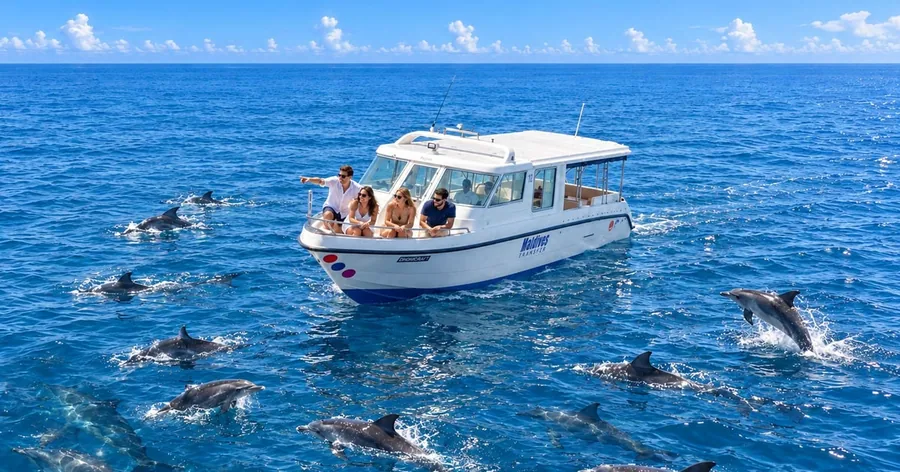
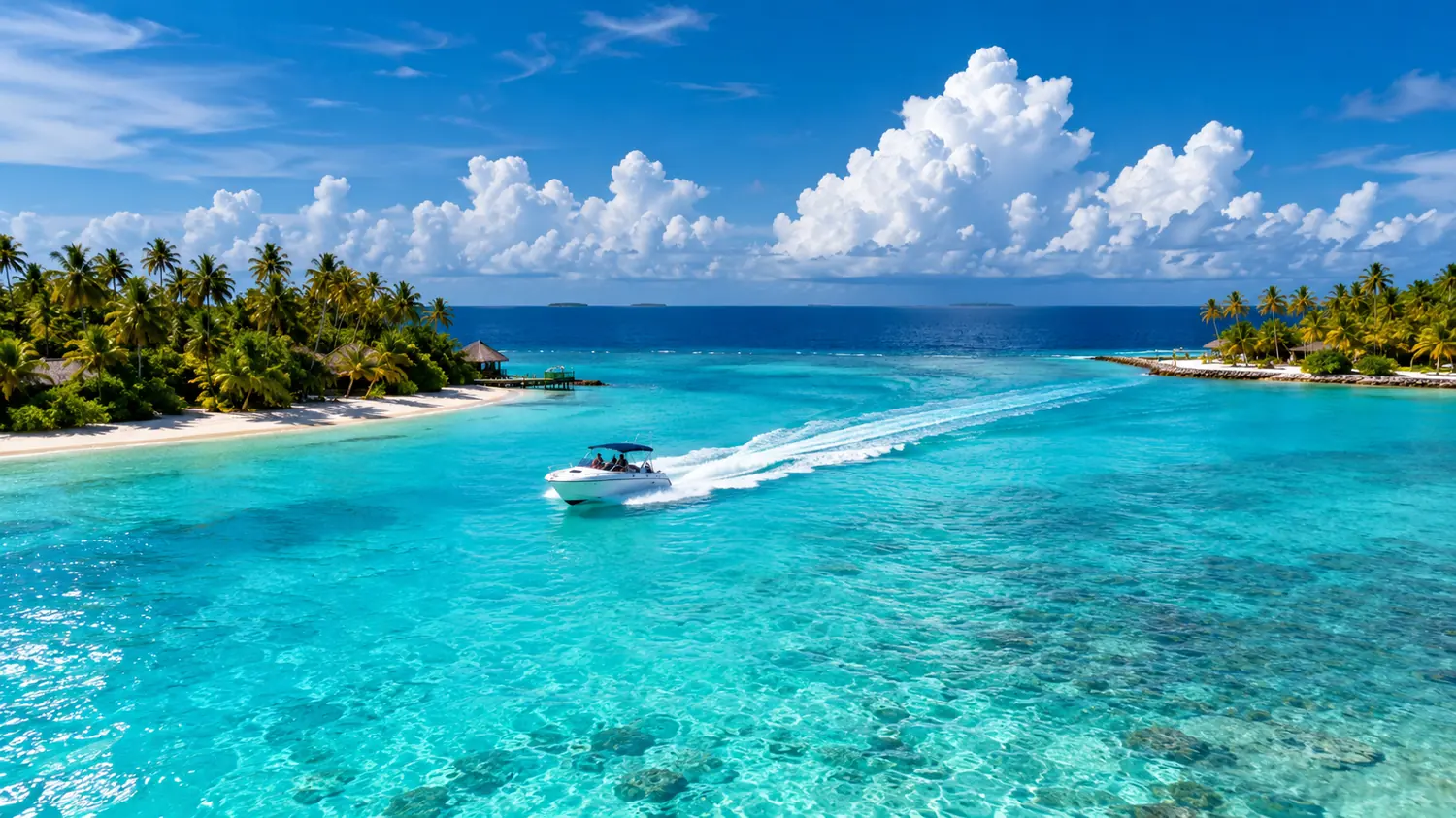
The Hanifaru Bay trip leaves Velana airport by private speedboat, with 10 or 25 seats, for a 10-hour day in Baa Atoll: about 2.5 to 3 hours each way, a guided snorkel in Hanifaru Bay when conditions allow, a second snorkel stop, a dolphin cruise and lunch on Dharavandhoo. The protected-area fee is included, sightings depend on the day, and it runs best in the southwest monsoon. Full refund if you cancel up to 24 hours ahead.
Explore the Hanifaru Bay manta tripWhere can you see mantas near Malé or Maafushi?
At manta cleaning stations, reef spots where small fish clean the mantas, which they visit all year. The side of the atoll changes with the monsoon: mostly the western sides from December to April and the eastern sides from May to November.
Mantas follow the plankton to the downstream side of each atoll, so crews move with the season. Shared snorkel trips from Malé and Maafushi focus on turtles, nurse sharks and stingrays rather than mantas, but mantas turn up now and then: one January guest on the nurse shark, reef and sandbank trip met mantas instead of nurse sharks. If mantas are your goal and you are staying in South Ari, the Dhigurah whale shark and manta trip ends at a manta cleaning or feeding station.
| Months | Monsoon | Where mantas gather | Hanifaru |
|---|---|---|---|
| December to April | Northeast monsoon (Iruvai): drier, calmer, clearer water | Mostly cleaning stations on the western sides of the atolls | Quiet, with few mantas feeding in the bay |
| May to November | Southwest monsoon (Hulhangu): wetter, short heavy showers, more plankton | Mostly the eastern sides of the atolls, where the plankton gathers | The season: feeding gatherings, busiest in the middle months |
Staying in South Ari? After the whale shark search, this four-hour trip from Dhigurah or Dhangethi visits a manta cleaning or feeding station.
Check dates for the South Ari whale shark and manta tripHow many manta rays live in the Maldives?
More than 6,000 reef mantas have been identified, the largest known reef manta population in the world. Researchers tell them apart by the pattern of spots on their bellies.
The Manta Trust identified its 5,000th Maldivian manta in December 2020, and the Maldives Manta Conservation Programme now counts more than 6,000. Many of them return to the same cleaning stations and feeding spots year after year, which is how researchers follow their lives. Photos of a manta's underside help groups such as the Manta Trust track individuals across the atolls.
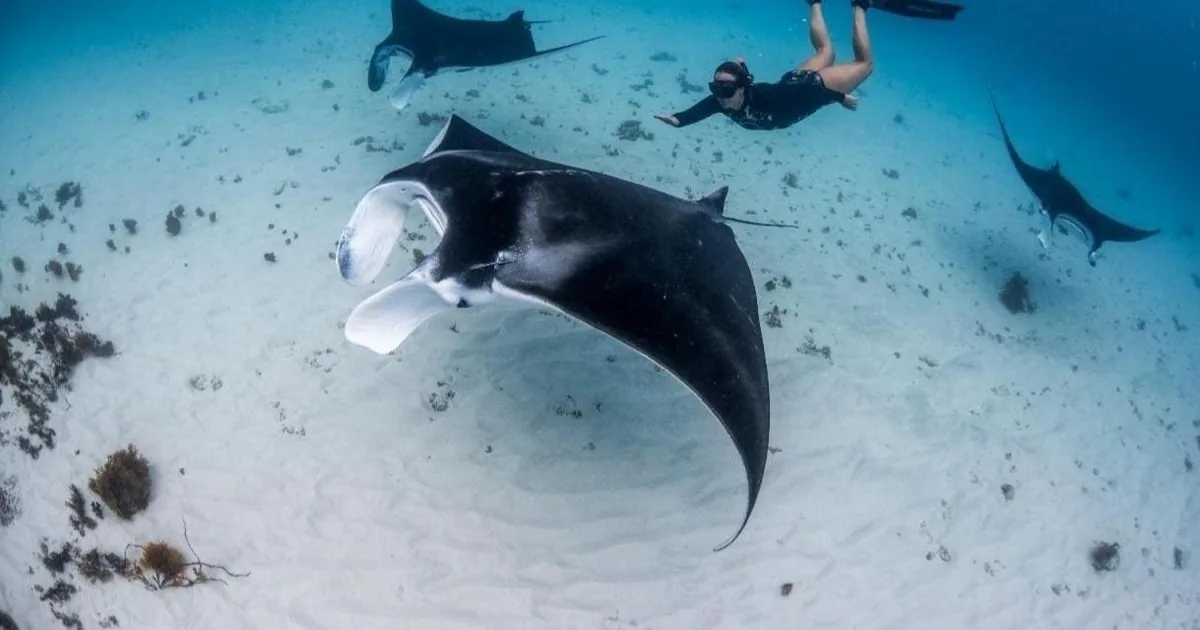
Are manta rays protected in the Maldives?
Yes. All rays, including both manta species, have been protected in the Maldives since 2014, and Hanifaru Bay itself is a protected area with rangers. On the water that means no touching, no chasing and a calm distance.
- Keep your distance: stay about 3 m from a manta and let it come closer if it chooses.
- No touching: a touch rubs off the protective coating on their skin.
- Stay at the surface: at Hanifaru, float above the mantas rather than diving down to them.
- Approach from the side: never block a manta's path or swim at it head on.
- No flash: natural light gives the best photos anyway.
- Follow your guide: watch for the signals on when to slip in and when to climb out.
The rules for the whale sharks of South Ari are in swimming with whale sharks.
Is Hanifaru Bay worth the journey?
Yes, if your dates fall in the season and you can give it two or three days in Baa Atoll. A single day by speedboat is a bet on one date, which can still pay off but may also meet a quiet bay.
On a good day, Hanifaru is one of the great wildlife sights of the Indian Ocean: mantas looping through the plankton a few metres below you. On a quiet day the bay can be almost empty, and that is the honest trade-off. Time in Baa Atoll is the best way to tilt the odds your way.
If Hanifaru doesn't fit your plan, turtles, nurse sharks, stingrays and the occasional manta are a short boat ride from Malé and Maafushi; the trips are compared in the best snorkeling trips in the Maldives.
Short on time near Malé? Three hours to a coral reef, the nurse shark point and a sandbank, with a guide in the water and a lifeguard on board.
Check dates for the nurse shark, reef and sandbank tripFrequently asked questions
Can you see mantas at Hanifaru Bay in December?
Rarely: from December to April few mantas feed in the bay. Visit from May to November, or look for mantas at cleaning stations on the western sides of the atolls in those months.
Do manta rays sting?
No. Mantas have no stinging barb, feed on plankton and are calm around snorkelers. They glide close by, so keep your distance and let them pass.
Do you need to arrange the Hanifaru permit yourself?
Usually not: a protected-area fee applies and your operator or guesthouse normally arranges it with the visit. The Hanifaru Bay speedboat trip includes it.
Can you see mantas on a day trip from Maafushi?
Sometimes. Shared trips from Maafushi focus on nurse sharks, stingrays and turtles, and a manta is a bonus. For a planned manta stop, the South Ari trip from Dhigurah ends at a manta station.
Ready to book
Choose your trip
Check your date and the live price on GetYourGuide; the refund terms are shown on each option.
Hanifaru Bay Mantas by Speedboat
A private speedboat to Baa Atoll for the manta season in Hanifaru Bay, about 2.5 to 3 hours each way
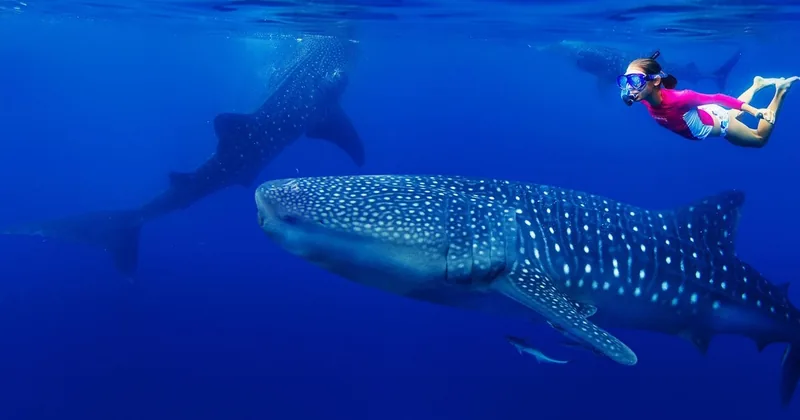
Whale Sharks & Mantas, South Ari
For guests staying on Dhigurah or Dhangethi: a search for whale sharks in the South Ari marine area, then a manta station
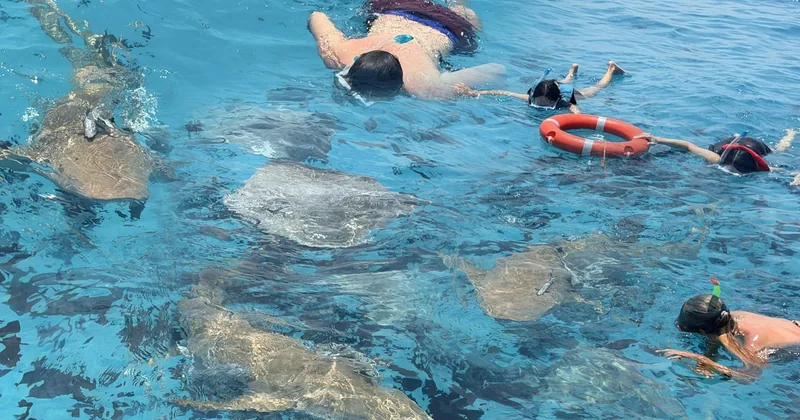
Nurse Sharks, Reef & Sandbank
- Pickup in Malé, Hulhumalé or at the airport
- Speedboat with shade and an onboard toilet
- Mask, snorkel, fins and a life jacket